Mandate
A job aggregator for UN, NGO, and international organization vacancies to simplify the process of applying to countless distinct job portals.
Finding early career opportunities in a difficult job market
In early 2026, I created an internship database using a simple Shiny app interface for political science students and recent graduates wanting to work in quantitative research and policy analysis serving the greater good at NGOs, think tanks, and other organizations.
Compiling listings for that site is how I found my own internship at the United Nations. It also showed me that every update meant visiting dozens of career pages by hand and constantly checking for new listings, but never truly being able to keep up.
At the UN, I heard the same frustration from early-career colleagues hoping to stay in the UN system. They described the job search as exhausting, because so many agencies run their own portals. While some give you the option to subscribe to new listings, others only work if you remember to check back constantly.
I realized that the shortcoming of the Shiny app was the same problem applicants were having. Manually curating lists of jobs is nearly impossible to keep current and requires more labor than actually applying for the jobs.
Hearing my colleagues share this exact problem, I knew I could fix it. I created a job aggregator that automatically obtains data from the organizations and sends alerts for new ones.
Automating the job search
Every day, Mandate gathers job listing data from UN agencies, international organizations, and NGOs, and puts it all in one place.
For each organization, I inspected its job portal to see whether the organization offers an API or whether I'd need to parse the HTML. From there, I created and tested Python scripts that obtain as many details about each listing as possible, from opening and closing dates to the job description.
Then, after collecting a couple hundred listings, I asked my colleagues what would be the most useful ways to filter them. They wanted a means of finding early-career opportunities, such as internships, rather than paging through countless managerial and director-level openings. I created Python scripts to categorize listings by career stage, using information such as years of experience and academic qualifications. They also had preferences on where in the world they would work, so I created geographic filters as well.
New listings are then added, and existing listings updated, to a database that stores listings in a standardized format for all organizations.
The Python scripts run daily on a schedule with GitHub Actions. If anything breaks, I get an email telling me which organization's scraper failed, so I can pinpoint the issue on that portal.
Creating the interface
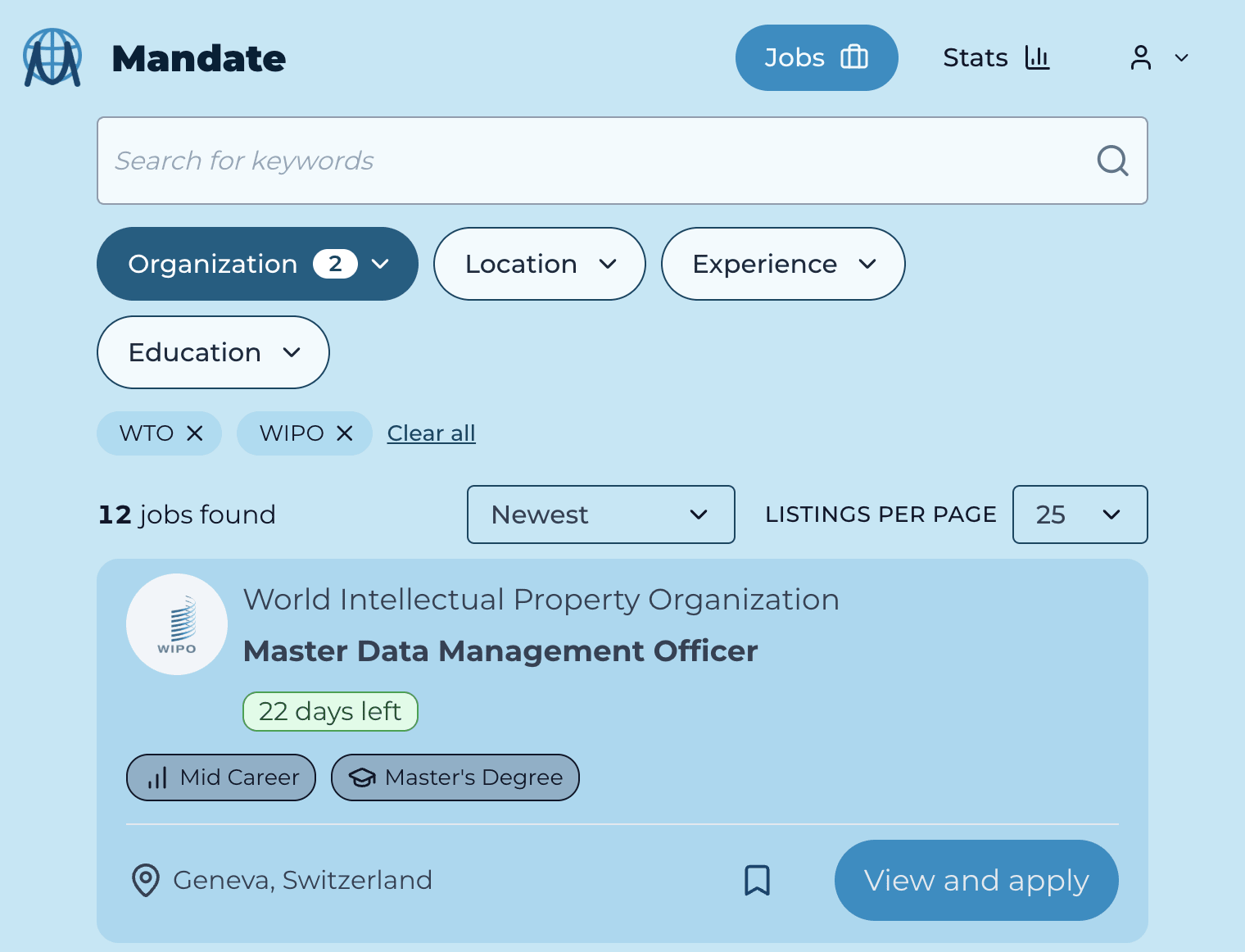
I looked at various job boards for inspiration, and after many iterations, created a Next.js website where each listing has its own card with the basic details, such as job title, organization name, location, and closing date. Each card links to a separate page where further information can be explored, in a consistent format. If users want further details or wish to apply, they can navigate to the organization's own listing page.
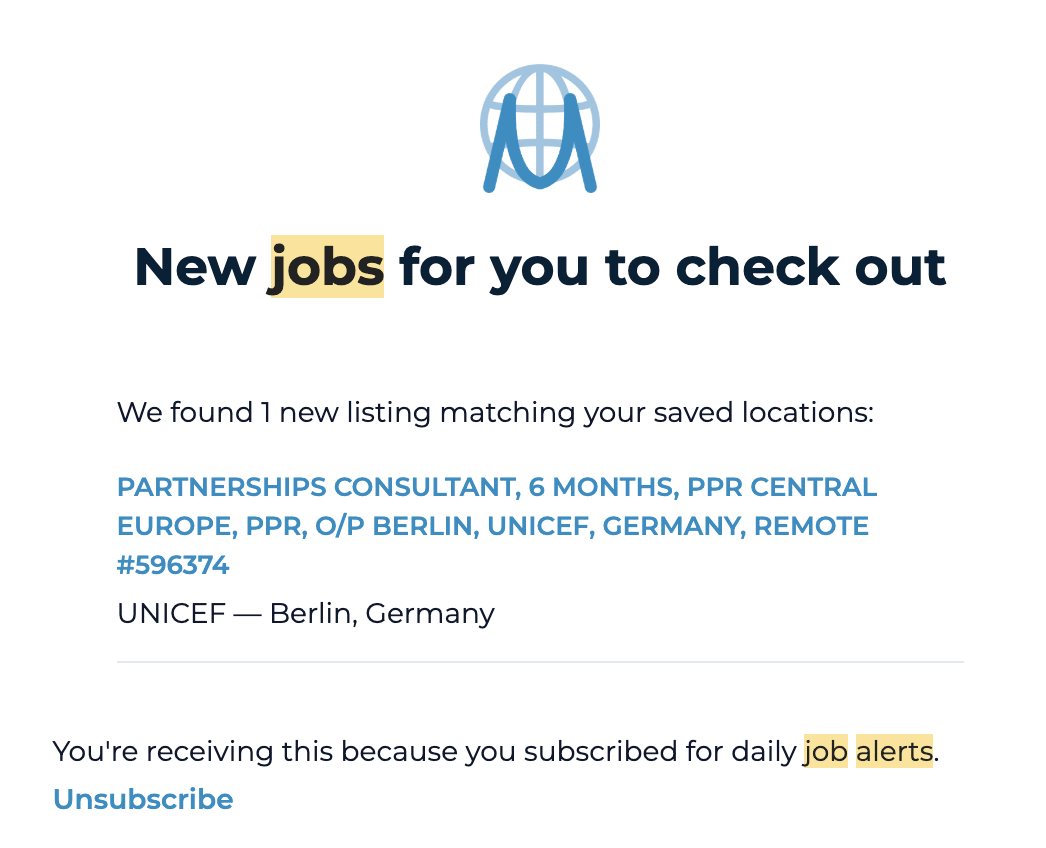
If users create an account, they also have the option to bookmark listings and set preferences as to what types of jobs they want updates on. Every day, after the new job listings are gathered, users will receive a daily digest email based on these preferences.
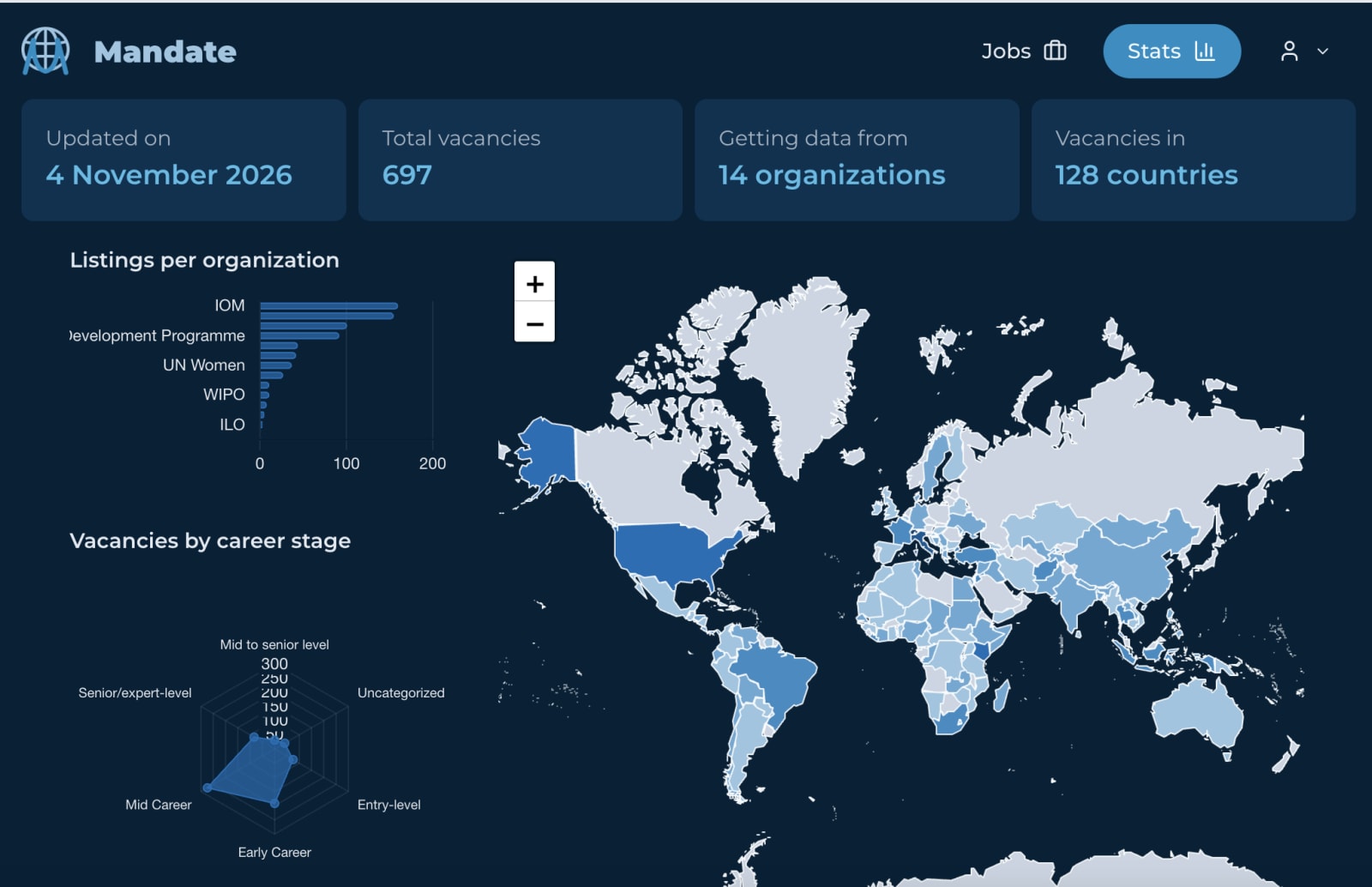
I also built a dashboard page, where users can explore where and what listings are open, with summary statistics, a map, and other visualizations showing macro-trends in the listings.